Blue-grey coat, short hair, a family resemblance: the Chartreux is often mistaken for a blue British Shorthair, a Russian Blue or a Korat. They are in fact four distinct breeds, with different origins, standards and build. The FIFe Chartreux standard itself requires a clear distinction from the Russian Blue and the British Blue and advises against crossing with these two breeds. This page sets out the points that help tell them apart, with photographs.
The four breeds at a glance
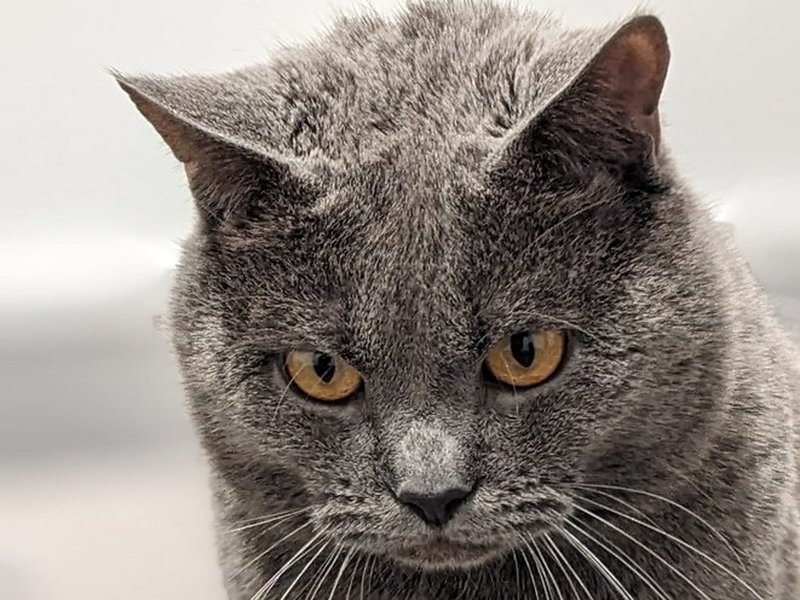
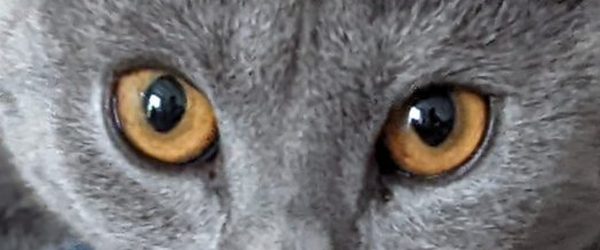
Chartreux
Solid and muscular, trapezoid head, eyes from deep yellow to copper, woolly double coat.
Photo: I Certosini di Castelletto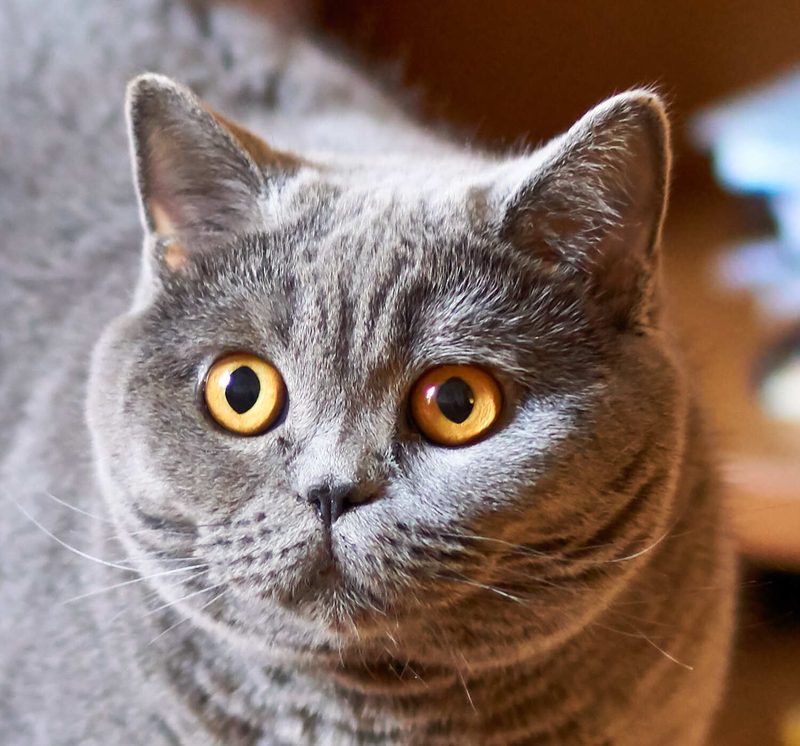
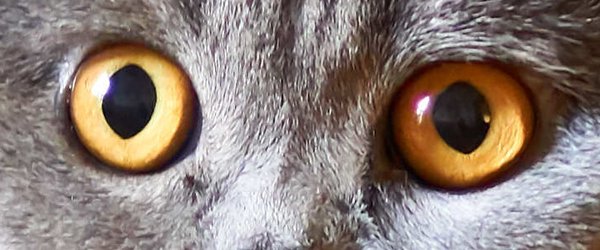
British Shorthair (blue)
Compact and massive, round head, copper or deep orange eyes, dense, crisp coat.
Photo: George E. Koronaios, CC BY-SA 4.0, via Wikimedia Commons. Cropped.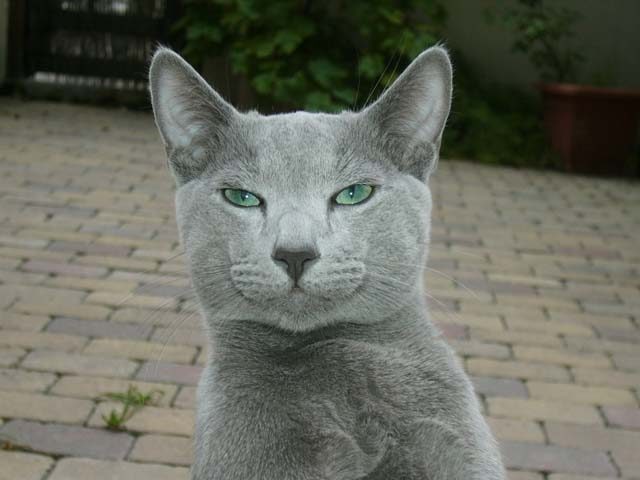
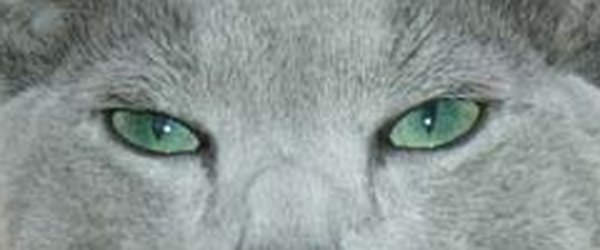
Russian Blue
Slender and fine-boned, short wedge head, large ears, vivid green eyes, plush coat with a silvery sheen.
Photo: Jacques Julien Photo, CC BY-SA 4.0, via Wikimedia Commons. Resized.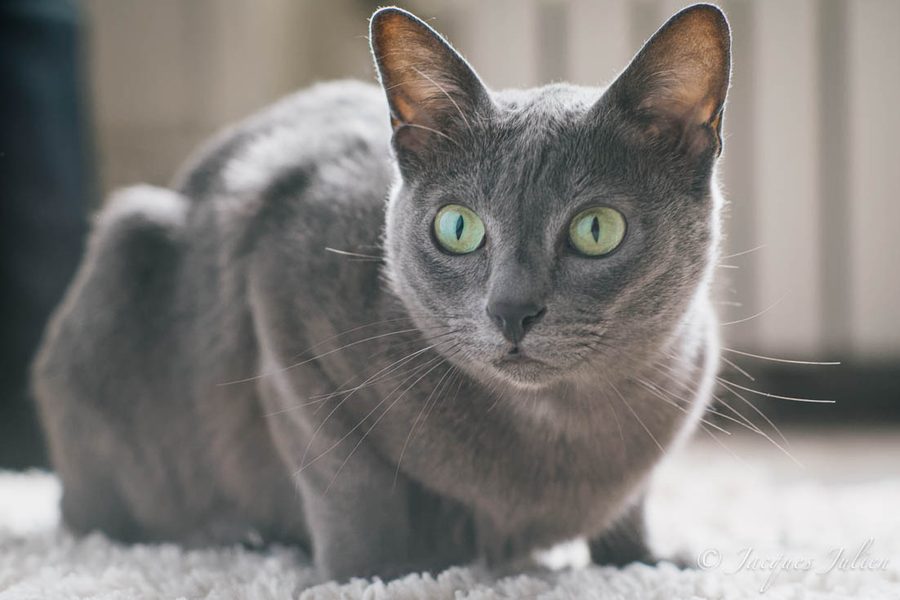
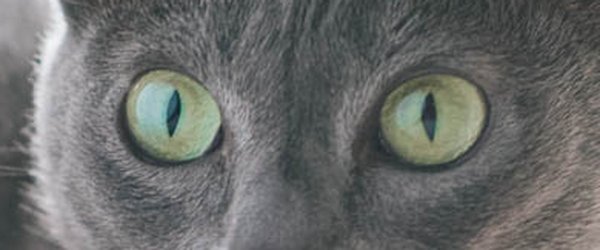
Korat
Medium and muscular, heart-shaped head, very large round green eyes, silver-blue with silver tips.
Photo: Jacques Julien Photo, CC BY-SA 4.0, via Wikimedia Commons. Resized.The eyes
Eye colour is the first clue, but not enough on its own: the blue British and the Chartreux both have copper to orange eyes, while the Russian Blue and the Korat have green ones.
The body
The profile silhouette tells more than the colour: massive and low, slender, arched, or solid and well proportioned.
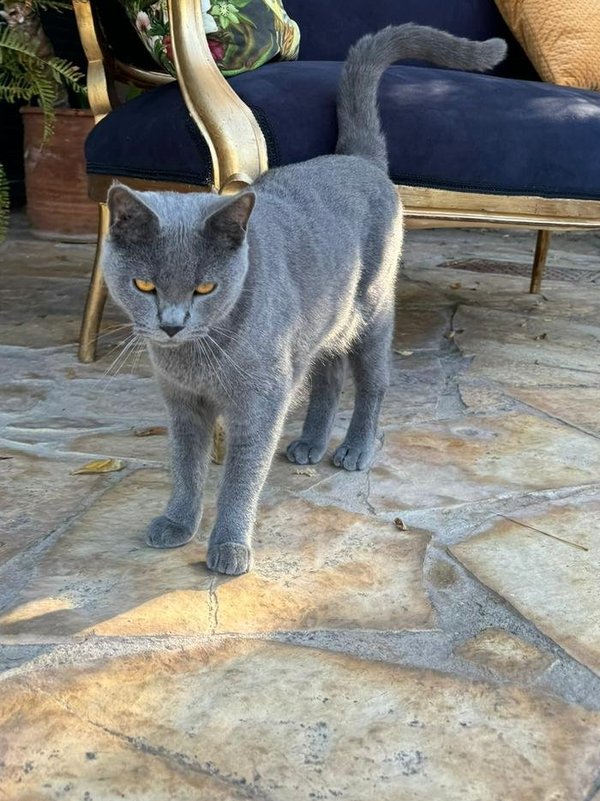
Chartreux
Solid, broad chest, legs of medium length and strong, medium tail with a rounded tip.
Photo: I Certosini di Castelletto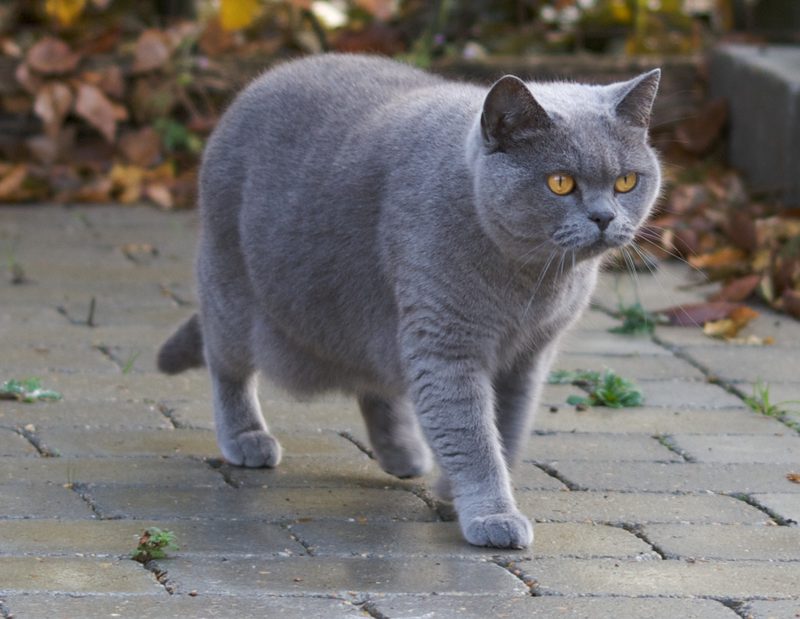
British Shorthair (blue)
Compact (cobby), broad chest, short sturdy legs, short thick tail.
Photo: Martin Hedegaard, CC BY 2.0, via Wikimedia Commons. Cropped.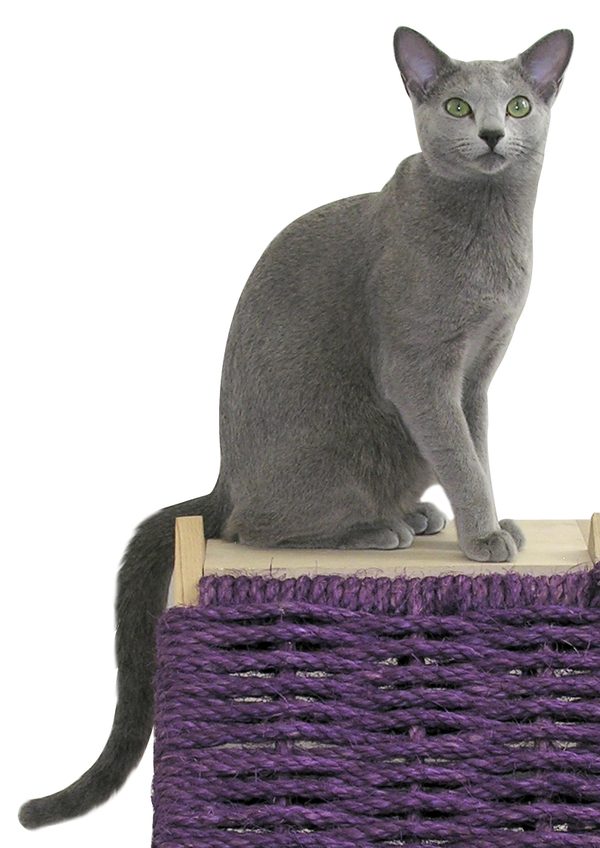
Russian Blue
Long and slender, medium bone, fine high legs, long tapering tail.
Photo: Flor de Azur, CC BY-SA 3.0, via Wikimedia Commons. Resized.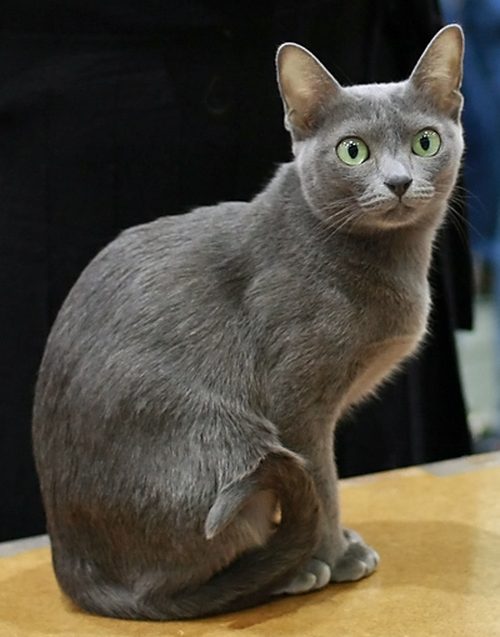
Korat
Semi-cobby but elegant, arched back, hind legs slightly longer than the front.
Photo: heikkisiltala, CC BY-SA 3.0, via Wikimedia Commons. Cropped.Point-by-point comparison
| Chartreux | British Shorthair (blue) | Russian Blue | Korat | |
|---|---|---|---|---|
| Origin | France | United Kingdom | Disputed origin (northern Russia, developed in western Europe) | Thailand |
| Body | Medium to large, solid, muscular, broad chest | Medium to large, compact (cobby), sturdy | Long, slender, medium bone | Medium, semi-cobby, muscular and supple, arched back |
| Head | Trapezoid, wide at the base and narrow at the top; well-developed jowls in the male | Round and massive, broad skull | Short wedge, long flat skull, straight lines | Heart-shaped from the front, broad between and across the eyes |
| Nose | Broad and straight | Short and broad, slight indentation | Straight, in line with the forehead | Slight indentation in profile, tip curving slightly downward |
| Ears | Medium, set high on the skull, slightly flaring | Small, rounded tips | Large, fairly pointed, wide at the base | Large, broad at the base, slightly rounded tips |
| Eyes | Large and open, deep yellow to copper, outer corner slightly raised | Large and round; in blue, copper or deep orange | Almond-shaped, wide apart, vivid green | Very large and round, brilliant green (amber allowed up to 2 years) |
| Legs and tail | Medium legs, strong, broad paws; medium tail, rounded tip | Short strong legs, round paws; short thick tail | Fine high legs, small oval paws; fairly long tapering tail | Hind legs slightly longer; medium-long tail, thicker at the base |
| Coat | Glossy, dense, double coat slightly woolly at the base; all shades of blue, pale blue-grey preferred | Short and dense, not lying flat, good undercoat, crisp to the touch | Short, very dense and fine, plush-like, double coat; blue-grey with a silvery sheen | Single coat, close-lying, glossy and fine; silver blue only, hairs lighter at the root with silver tips |
Summary of the respective FIFe standards currently in force (Chartreux, Russian Blue, Korat and British Shorthair/Longhair).
How to recognise them at a glance
Green eyes? Russian Blue or Korat. With a heart-shaped head, very large round eyes and an arched back it is a Korat. With a wedge-shaped muzzle, large ears and a long, slender figure it is a Russian Blue.
Copper or orange eyes? British or Chartreux. A round head on a short, low, compact body: British. A trapezoid head on a solid, better proportioned body, with medium ears set high: Chartreux.
The coat confirms it: woolly double coat in the Chartreux, dense and crisp in the British, soft as a silvery plush in the Russian Blue, single and glossy with silver tips in the Korat.
Learn more
The Chartreux has its own FIFe standard and a history that has often crossed that of the blue British. The standards of the other breeds are published by the FIFe: Korat, Russian Blue, British Shorthair and Longhair.
Photographs from Wikimedia Commons, used under their respective Creative Commons licences. Cropped or resized images remain under the same licence as the original.